
Is It Better to Travel from Delhi to Kedarnath by Taxi or Bus?
If you're planning a trip from Delhi to Kedarnath, you've probably already asked yourself this question: taxi or bus? It seems like a small decision, but it actually shapes your entire trip: how tired you are when you reach Gaurikund, how much you spend, and how much control you have over your own schedule.
Both options will get you there. Both cover the same 450 km. But the journey feels very different depending on which one you pick. In this blog, we'll walk you through what each option is really like, what it costs, and a few things about this route that most people only find out once they're already on the road.
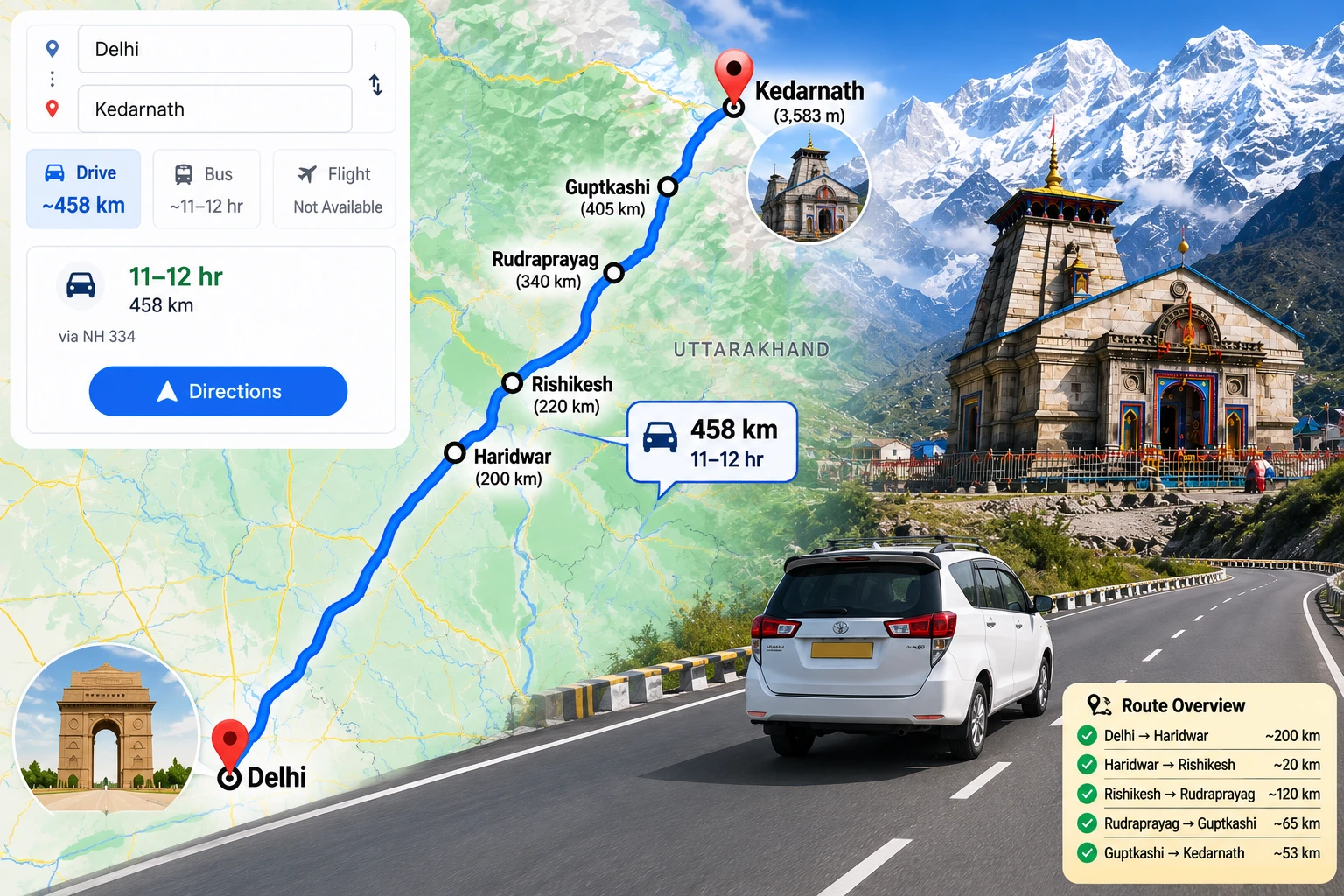
How Far Is Kedarnath from Delhi, and What's the Route?
Delhi to Kedarnath is about 450 km by road, up to Sonprayag and Gaurikund. After that, there's no more road. You either walk the 16-18 km trek, take a pony or palki, or book a helicopter.
Most people take the NH334 route: Delhi to Haridwar, then Rishikesh, Devprayag, Rudraprayag, Guptkashi, and finally Sonprayag.
Here's something that catches a lot of people off guard. Your taxi or bus doesn't actually take you all the way to Gaurikund. During the yatra season, private vehicles are stopped at Sonprayag, and everyone is moved to Gaurikund in government shuttle vehicles. Only from Gaurikund does the actual trek begin. Nobody really tells you this in advance, but it matters, because it changes how you should pack for the last leg.
On paper, the drive takes 12-15 hours. In practice, almost nobody does it in one go. Uttarakhand doesn't allow driving on hill roads at night, roughly between 8 PM and 4 AM, so you'll need to break the trip into two days with an overnight stop somewhere like Rudraprayag or Guptkashi.
What a Two-Day Journey Actually Looks Like
-
Day 1, early morning: Leave Delhi, drive to Haridwar or Rishikesh (around 5-6 hours with a breakfast stop)
-
Day 1, rest of the day: Continue to Rudraprayag or Guptkashi (another 7-8 hours through the hills)
-
Day 1, evening: Stop for the night. There's no way around this because of the driving ban
-
Day 2, morning: Drive on to Sonprayag (2-3 hours)
-
Day 2, later morning: Take the shuttle to Gaurikund, then start the trek
A lot of people try to squeeze this into one day, and it almost never works out well. You end up exhausted right before the hardest part of the trip: the trek itself.
Traveling by Bus, What It's Actually Like
Buses run pretty regularly on this route during the season (April to November), both government and private. Most leave Delhi's ISBT late in the evening, get to Rishikesh by early morning, and reach Sonprayag by late morning the next day.
What's good about the bus:
-
It's the cheapest way to make this trip
-
You don't have to worry about the drive at all
-
AC, non-AC, and Volvo buses are all available in season
What's not so great:
-
You're stuck with a fixed departure time and no say in the route
-
The trip ends up taking longer overall because of scheduled stops
-
You're sharing space with strangers for 13+ hours
-
Not much legroom, not much room for luggage
-
You reach more tired, right when you need energy for the trek
-
Buses drop you at a bus stand, not your hotel, so you'll need a local ride from there
Traveling by Taxi, What It's Actually Like
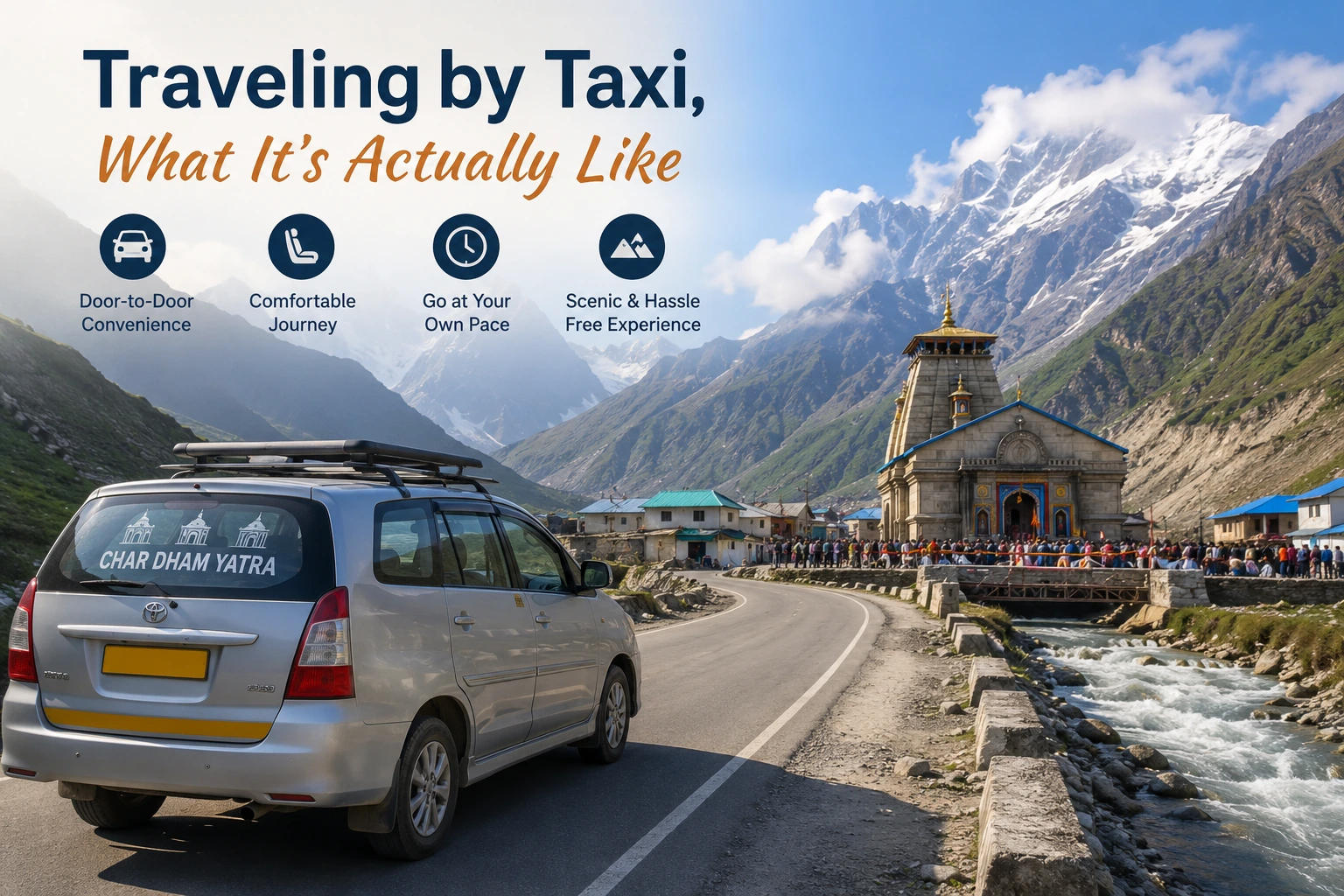
A private taxi is what most families and groups end up choosing, especially if there are elderly people or kids involved. The big difference is control. You decide when to leave, where to stop, and how long to stay there. Want to catch the Ganga Aarti in Haridwar or stop in Rishikesh for a bit? You can, without asking anyone.
What's good about a taxi:
-
Pickup right from your home or hotel in Delhi
-
You set the pace, stop when you want, drive when you want
-
More space, more comfort, better for long hours in the car
-
Much easier if you're traveling with older parents or young children
-
Drivers who actually know these roads: the turns, the weather, where it gets tricky
-
It's just your group in the car, no strangers
-
You can easily extend the trip to other Char Dham spots without rebooking anything
-
Drivers often know the good dhabas, clean restrooms, and which stretches to avoid after dark. That's the kind of local knowledge you won't get from a bus schedule
What's not so great:
-
Costs more per person, especially if you're traveling alone
-
You'll want to book ahead during peak season, or you'll end up paying more at the last minute
Taxi vs Bus, Quick Comparison
|
Factor |
Taxi |
Bus |
|
Comfort |
Private, more space |
Shared, tighter seating |
|
Flexibility |
You control the stops and timing |
Fixed schedule |
|
Cost for a group of 4 |
Splits well, moderate per person |
Cheapest overall |
|
Cost for a solo traveler |
More expensive |
Most affordable |
|
Travel time |
Usually quicker, fewer forced stops |
Slower, due to scheduled halts |
|
Best for |
Families, elderly, small groups |
Solo or budget travelers |
|
Driving experience |
Local drivers who know the route |
Varies by operator |
|
Pickup |
From your door |
Fixed bus stand only |
|
Luggage room |
Plenty |
Limited |
|
Sightseeing on the way |
Easy to do |
Rarely possible |
What Does It Actually Cost?
Bus fares are simple: usually somewhere between Rs. 800 and 1,500 for an ordinary government bus, and close to double that for AC or Volvo.
The Delhi to Kedarnath taxi fare depends on the vehicle you pick and whether it's one way or round trip. Here's a general idea of what different vehicle types cost on this route:
|
Vehicle |
Trip type |
Rate |
Approx. total fare |
|
5 Seater |
One way |
Rs. 13/km |
Rs. 6,350 |
|
5 Seater |
Round trip |
Rs. 13/km |
Rs. 14,700 |
|
7 Seater |
One way |
Rs. 17/km |
Rs. 8,150 |
|
7 Seater |
Round trip |
Rs. 17/km |
Rs. 18,300 |
|
Innova Crysta |
One way |
Rs. 20/km |
Rs. 9,500 |
|
Innova Crysta |
Round trip |
Rs. 20/km |
Rs. 21,000 |
|
Tempo Traveller (9-26 seater) |
One way |
Rs. 35/km |
Rs. 16,250 |
|
Tempo Traveller (9-26 seater) |
Round trip |
Rs. 35/km |
Rs. 34,500 |
These are approximate figures and can shift a bit with season, fuel prices, and the specific operator, so it's worth confirming the exact fare at the time of booking. On top of the taxi or bus fare, budget for a few other costs either way: the Sonprayag-Gaurikund shuttle, pony/palki/helicopter charges if you're not trekking, a place to stay, food, and yatra registration (free right now, but that could change).
One thing worth knowing: prices on both buses and taxis can jump higher during peak season (May-June) or around big festivals, simply because there aren't enough vehicles for everyone who wants one. Booking a taxi a couple of weeks ahead during this window isn't just convenient, it's often the only way to avoid paying a lot more.
A Few Things Nobody Tells You About This Route
Your phone probably won't work for most of the trek
This one surprises people. Jio and Airtel work fine up to Guptkashi, but after that, coverage gets patchy fast. BSNL tends to hold on a bit longer near Sonprayag and Kedarnath, mostly for calls, but even that isn't reliable. Between Gaurikund and Kedarnath, there are stretches with no signal at all. Download offline maps before you leave Rishikesh, and let your family know your plan in advance. Don't count on being able to text updates along the way.
Some stretches are genuinely risky in the rain
The road between Rudraprayag and Sonprayag, especially near Munkatiya, is known for landslides after heavy rain. This is exactly why experienced drivers avoid this stretch after dark, and why most people skip the July-August window entirely for this route.
Altitude sneaks up on people
Kedarnath sits at about 3,583 meters. If you skip the overnight halt and try to trek right after a long, tiring drive, you're much more likely to feel the effects: headaches, nausea, that kind of thing. Giving yourself one rest night before the trek genuinely makes a difference.
Pick your seat if scenery matters to you
Small tip, but a useful one. From Rishikesh onward, the left side of the car usually has better views of the Alaknanda and Mandakini rivers running alongside the road. The right side mostly faces the hillside. If you're taking a taxi, just ask for that seat. You obviously can't do that on a bus.
Fuel and cash get harder to find after Rudraprayag
Petrol pumps thin out quickly. Tilwara, Agastyamuni, and Phata are about the only reliable ones left. ATMs stop being dependable past Guptkashi too, so carry enough cash before you get there, even if your driver is the one handling fuel stops.
Pack differently for the last leg
Since your vehicle stops at Sonprayag and you're shuttled to Gaurikund from there, it helps to pack a small, light bag, around 5-7 kg, with just what you need for the trek and your stay at Kedarnath. Leave the rest of your luggage behind with the driver or at your hotel instead of dragging it through the shuttle and the trek.
Choosing a Taxi Service for This Route
If you do go with a Delhi to Kedarnath taxi service, it's worth choosing an operator that actually knows this route, not just any highway driver. A few things worth checking:
-
Vehicles that are properly maintained for hill roads
-
Drivers who've actually driven in the mountains before, not just on flat highways
-
Clear pricing, with nothing sprung on you halfway through the trip
-
Some help with your yatra registration paperwork
-
An itinerary that can flex around stops like Haridwar or Rishikesh if you want them
SSP Tour and Travels offers a Delhi to Kedarnath taxi service, with drivers who know these hill roads and itineraries that can adjust to your group's pace, whether it's a quick Kedarnath trip or part of a longer Char Dham journey.
What to Pack
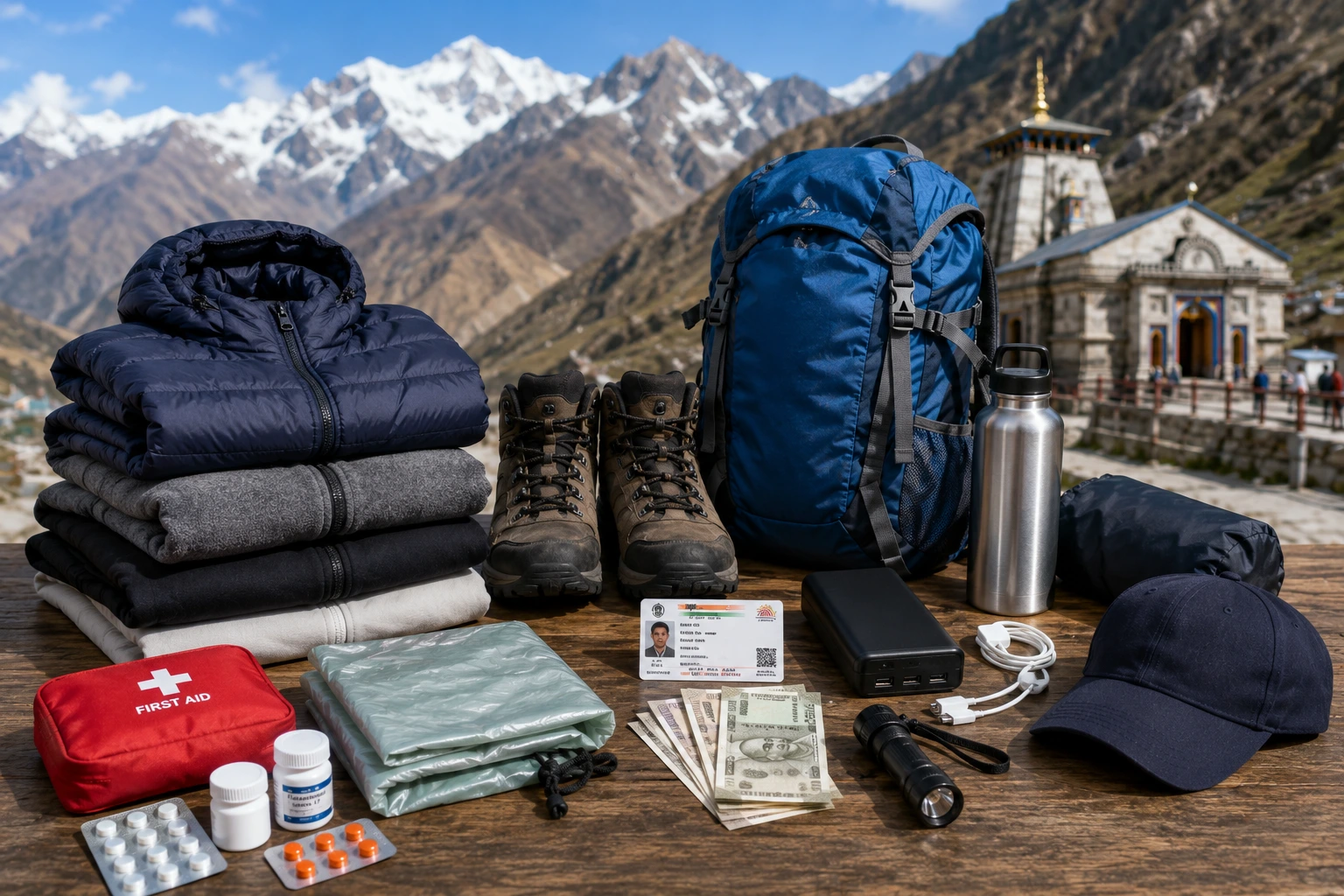
-
Warm clothes: even in summer, nights at altitude get cold enough to need a proper jacket
-
A poncho or rain jacket, since the weather can turn quickly
-
Trekking shoes you've already broken in, not brand new ones
-
A light daypack (5-7 kg) for the Gaurikund-to-Kedarnath stretch
-
Your Aadhaar or another valid ID for registration and checkpoints
-
Enough cash, since ATMs stop being reliable past Guptkashi
-
A power bank, since charging points get rare past Sonprayag
-
Any regular medication, and a doctor's check beforehand if you have a heart or breathing condition
So, Taxi or Bus?
If you're traveling alone and money is tight, the bus does the job. It's not glamorous, but it gets you there.
But if you're traveling with family, older parents, or kids, or you just want a trip that doesn't wear you out before the trek even starts, a taxi is the better call. You get to move at your own pace, stop when you need to, and arrive in better shape for what's ahead.
For most people planning a trip from Delhi to Kedarnath by taxi, going with a reliable operator like SSP Tour and Travels takes a lot of the guesswork out of it, and lets you focus on the pilgrimage instead of the logistics.
Frequently Asked Questions
1. What is the Delhi to Kedarnath taxi fare?
It depends on the vehicle you choose. As a rough guide: a 5-seater is around Rs. 13/km (about Rs. 6,350 one way, Rs. 14,700 round trip), a 7-seater is around Rs. 17/km (about Rs. 8,150 one way, Rs. 18,300 round trip), an Innova Crysta is around Rs. 20/km (about Rs. 9,500 one way, Rs. 21,000 round trip), and a Tempo Traveller for larger groups is around Rs. 35/km (about Rs. 16,250 one way, Rs. 34,500 round trip). Prices go up during peak season (May-June) and around festivals, so it's worth confirming the exact fare at the time of booking rather than going by an old quote.
2. What is the Delhi to Kedarnath bus ticket price?
Ordinary government buses are the cheapest option, usually starting around Rs. 800-1,500 for the Delhi to Sonprayag/Gaurikund stretch. AC and Volvo buses cost more, often close to double, and there isn't always a single direct bus, so you may need to change at Haridwar or Rishikesh depending on the operator and season.
3. Is it cheaper to go by bus or taxi?
Bus is cheaper if you're traveling alone, since fares start around Rs. 800-1,500. But if you're traveling in a group, a taxi starts making more sense. A 5-seater at around Rs. 13/km works out to roughly Rs. 6,350 one way, and split across 4-5 people, that's not far off from bus fares, with a lot more comfort and flexibility thrown in.
4. Is there a direct bus from Delhi to Kedarnath?
Not exactly to Kedarnath itself, since no road goes past Gaurikund. But there are direct buses from Delhi to Sonprayag/Gaurikund during the yatra season, along with plenty of buses to Haridwar and Rishikesh from where you can catch a connecting bus or shared taxi onward.
5. How many days does it take to travel from Delhi to Kedarnath and back?
Most people plan for 4-5 days total: a day or two to get there with an overnight halt, a day for the trek and darshan, and a day or two for the return. It's possible to do it faster, but rushing tends to make the trek harder because of tiredness and the altitude.
6. How far is Kedarnath from Delhi?
About 450 km by road up to Sonprayag/Gaurikund, plus a 16-18 km trek from there to the temple.
7. Is it safe to travel by road from Delhi to Kedarnath?
Yes, generally, as long as you avoid driving at night on the hill sections and stay off the road during heavy monsoon rain, when landslides are more likely near Rudraprayag and Sonprayag.
8. Can my taxi or bus drive all the way to Kedarnath?
No. Vehicles stop at Sonprayag. From there, a government shuttle takes you to Gaurikund, and then it's trek, pony, palki, or helicopter.
9. Which vehicle is best for the Delhi to Kedarnath trip?
A sedan works fine for 2-3 people with light luggage. For families or larger groups, an SUV or Innova-type vehicle is more comfortable and handles the hill roads better.
10. Do I need to pay advance for a taxi booking?
Most operators ask for a partial advance, often around 15-25% of the total fare, to confirm the booking, with the rest paid at the end of the trip or as agreed.
11. Do I need to register for the Kedarnath Yatra?
Yes, it's mandatory: biometric/Aadhaar-based registration, even for helicopter passengers. You can do it online through the Uttarakhand tourism portal or at counters in Haridwar, Rishikesh, and Sonprayag.
12. When's the best time to travel from Delhi to Kedarnath?
May-June and September-October are usually the best months, with clearer roads and less landslide risk. Avoid July-August if you can, since the monsoon makes the Rudraprayag-Sonprayag stretch risky.
13. How much does the Sonprayag to Gaurikund shuttle cost?
It's a small, fixed shared-jeep fare, usually somewhere around Rs. 30-50 per person, since it's a short local transfer rather than a long-distance ride.
14. How long is the Gaurikund to Kedarnath trek, and how long does it take?
It's about 16-18 km one way, and most people take anywhere from 6 to 9 hours depending on fitness level and how many breaks they take.
15. Will I find ATMs along the way?
Yes, but only up to Guptkashi. Carry enough cash before that, since ATMs get unreliable past that point.