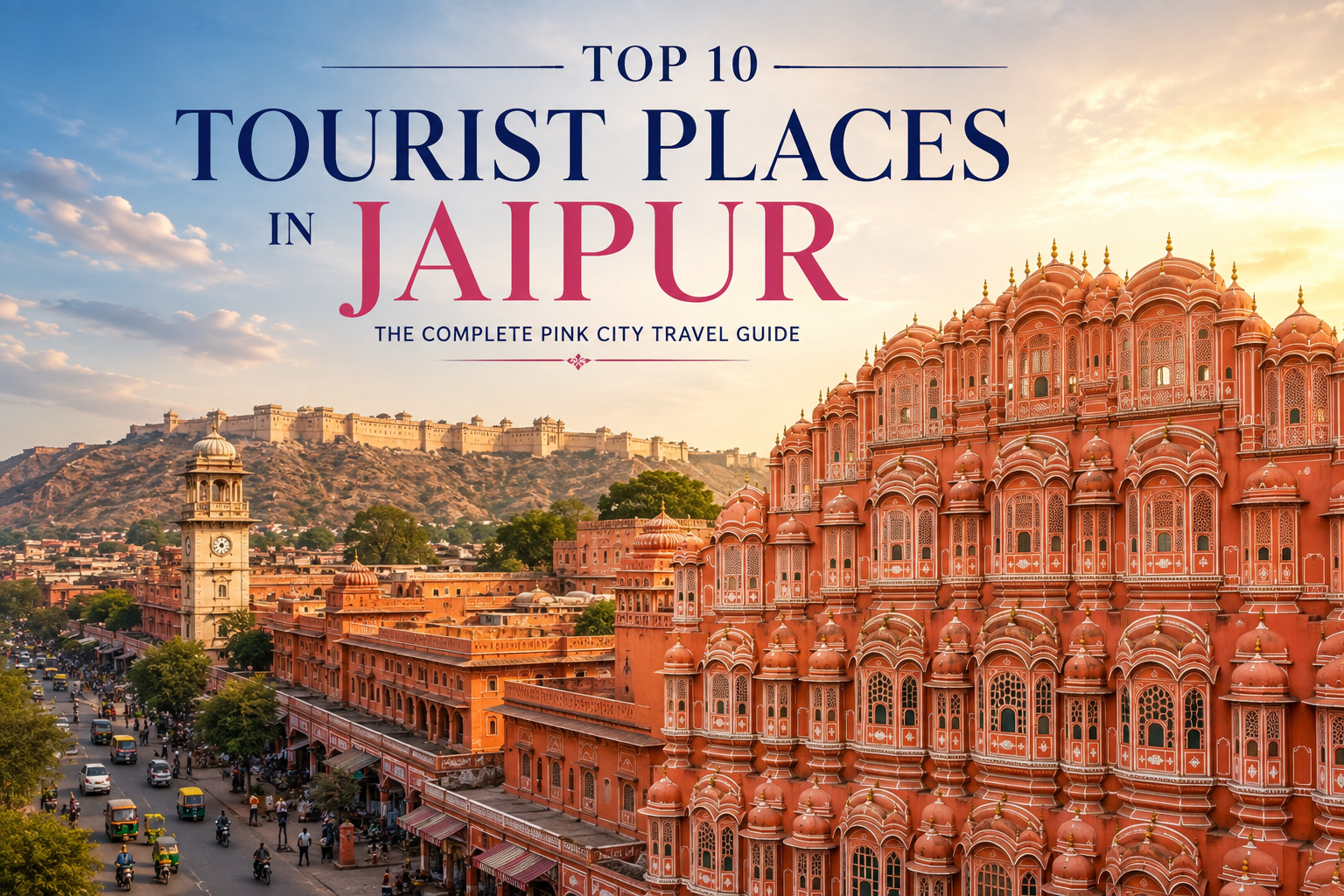
Top 10 Tourist Places in Jaipur: The Complete Pink City Travel Guide
The top tourist places in Jaipur are Amber Fort, Hawa Mahal, City Palace, Jantar Mantar, Nahargarh Fort, Jaigarh Fort, Jal Mahal, Albert Hall Museum, Birla Mandir, and Patrika Gate. Together, these ten landmarks capture the history, architecture, and culture that make Jaipur, Rajasthan's capital, one of India's most visited cities.
Jaipur, fondly known as the Pink City, was founded in 1727 by Maharaja Sawai Jai Singh II. Today it is a living museum of rose-hued facades, majestic forts, opulent palaces, and bustling bazaars. Every street corner tells a story, every fort holds a legend, and every sunset over the Aravalli hills feels like something out of a fairy tale.
At SSP Tour and Travels, we've spent years helping travelers experience Jaipur the right way, with comfortable transport, well-planned itineraries, and insider knowledge of the city's hidden corners. This guide walks you through the ten places in Jaipur you simply cannot afford to miss, along with practical tips to make your trip smooth and memorable.
Why Jaipur Should Be on Your Travel List
Jaipur isn't just a city; it's an experience. It's part of the famous Golden Triangle circuit (Delhi, Agra, Jaipur), which makes it one of the most visited cities in India. The architecture here reflects a rare fusion of Rajput valor and Mughal elegance, and the city's markets are a treasure trove for anyone who loves textiles, jewelry, and handicrafts. Add to that the mouthwatering Rajasthani cuisine, the warm hospitality of the locals, and the sheer grandeur of its monuments, and you have a destination that appeals to every kind of traveler: solo explorers, families, couples on a honeymoon, and even large tour groups.
At SSP Tour and Travels, our itineraries are designed to help you soak in all of this without the usual travel stress. From airport or railway station pickups to guided tours of every major landmark, we take care of the logistics so you can focus on the experience.
How to Reach Jaipur
Jaipur is well connected by air, rail, and road. The Jaipur International Airport receives regular domestic and a few international flights, while the Jaipur Junction railway station is a major hub on the Indian rail network. For travelers coming from the capital, a Delhi to Jaipur Taxi Service is one of the most convenient and comfortable ways to make the roughly 280-kilometer journey, allowing you to stop along the way at places like Neemrana Fort or local dhabas for authentic Rajasthani snacks. The drive typically takes around 5 to 6 hours depending on traffic and road conditions, and it gives you far more flexibility than fixed train or bus schedules.
Once you're in the city, SSP Tour and Travels can arrange comfortable, air-conditioned vehicles for local sightseeing, so you can move between forts, palaces, and markets without worrying about navigation, parking, or haggling with local transport.
Best Time to Visit Jaipur
The best time to visit Jaipur is between October and March, when the weather is cool and pleasant, ideal for exploring outdoor monuments and hilltop forts. Summers (April to June) can get extremely hot, with temperatures often crossing 40°C, while the monsoon season (July to September) brings occasional rain and lush green surroundings but also humidity. If you're planning a trip during the winter months, carry a light jacket for early morning and evening outings.
Now, let's dive into the top 10 tourist places in Jaipur that should be on every traveler's itinerary.
1. Amber Fort (Amer Fort)
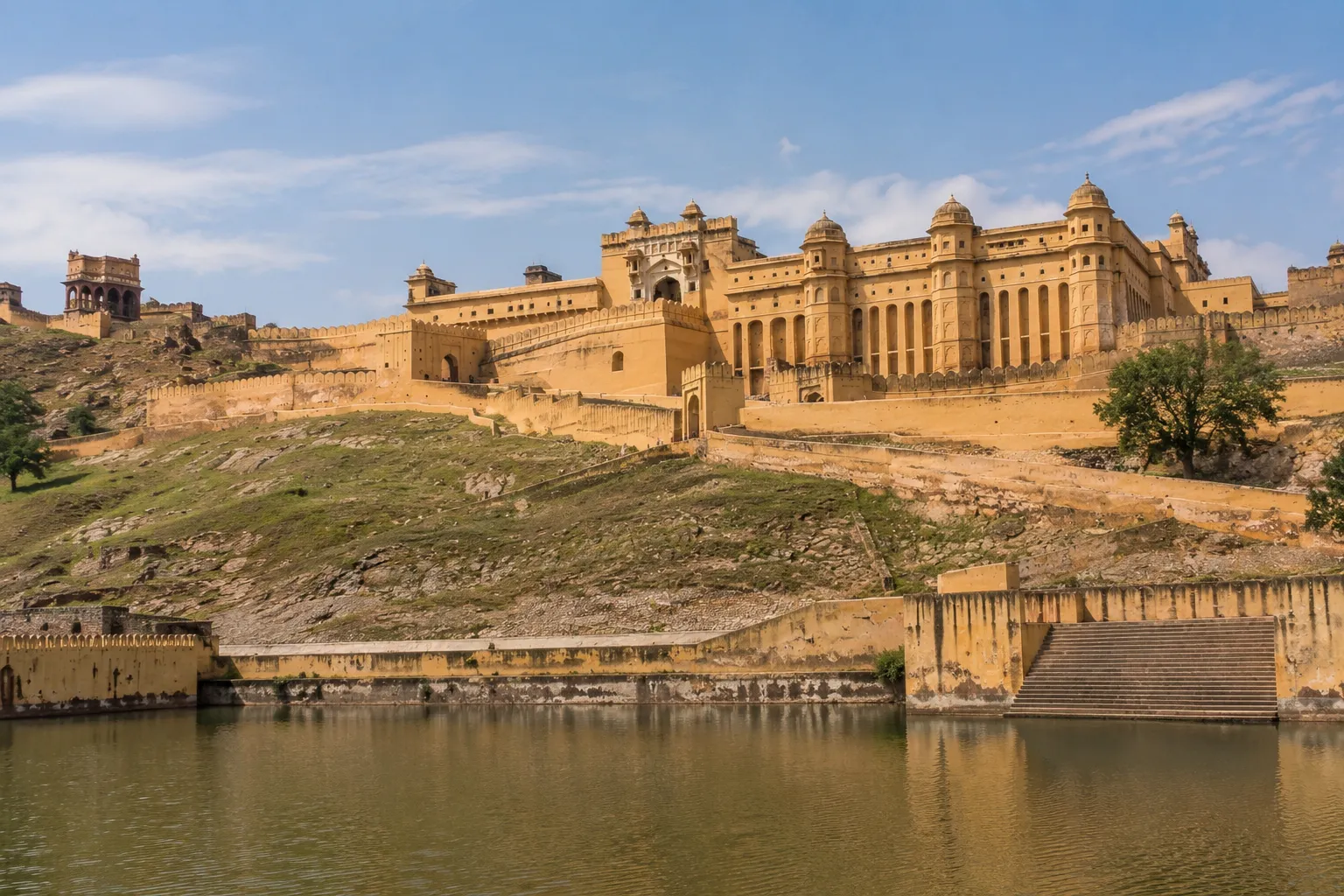
Perched on a hilltop overlooking the picturesque Maota Lake, Amber Fort is arguably Jaipur's most iconic and most-visited attraction. Built in the 16th century by Raja Man Singh, this UNESCO World Heritage Site is a stunning blend of Hindu and Rajput architecture, with grand ramparts, sprawling courtyards, and intricately carved gateways.
The highlight inside the fort is the Sheesh Mahal (Mirror Palace), where thousands of tiny mirrors embedded in the walls and ceiling create a dazzling light effect. Legend has it that a single candle's flame reflected across the mirrors could illuminate the entire hall. Wandering through the fort's many chambers, you'll come across the Diwan-e-Aam (Hall of Public Audience), the Diwan-e-Khas (Hall of Private Audience), and the Sukh Niwas, which was designed with a rudimentary but effective air-cooling system.
Many visitors choose to take a jeep or a short elephant ride up to the fort entrance, adding a touch of royal grandeur to the experience. Sound and light shows in the evening bring the fort's history to life, narrating tales of valor and romance from Rajasthan's royal past.
-
Best time to visit: Early morning or late afternoon, October to February
-
How to reach: Local taxis, autos, or a jeep/elephant ride up the hill
-
Time needed: 2–3 hours
2. Hawa Mahal (Palace of Winds)
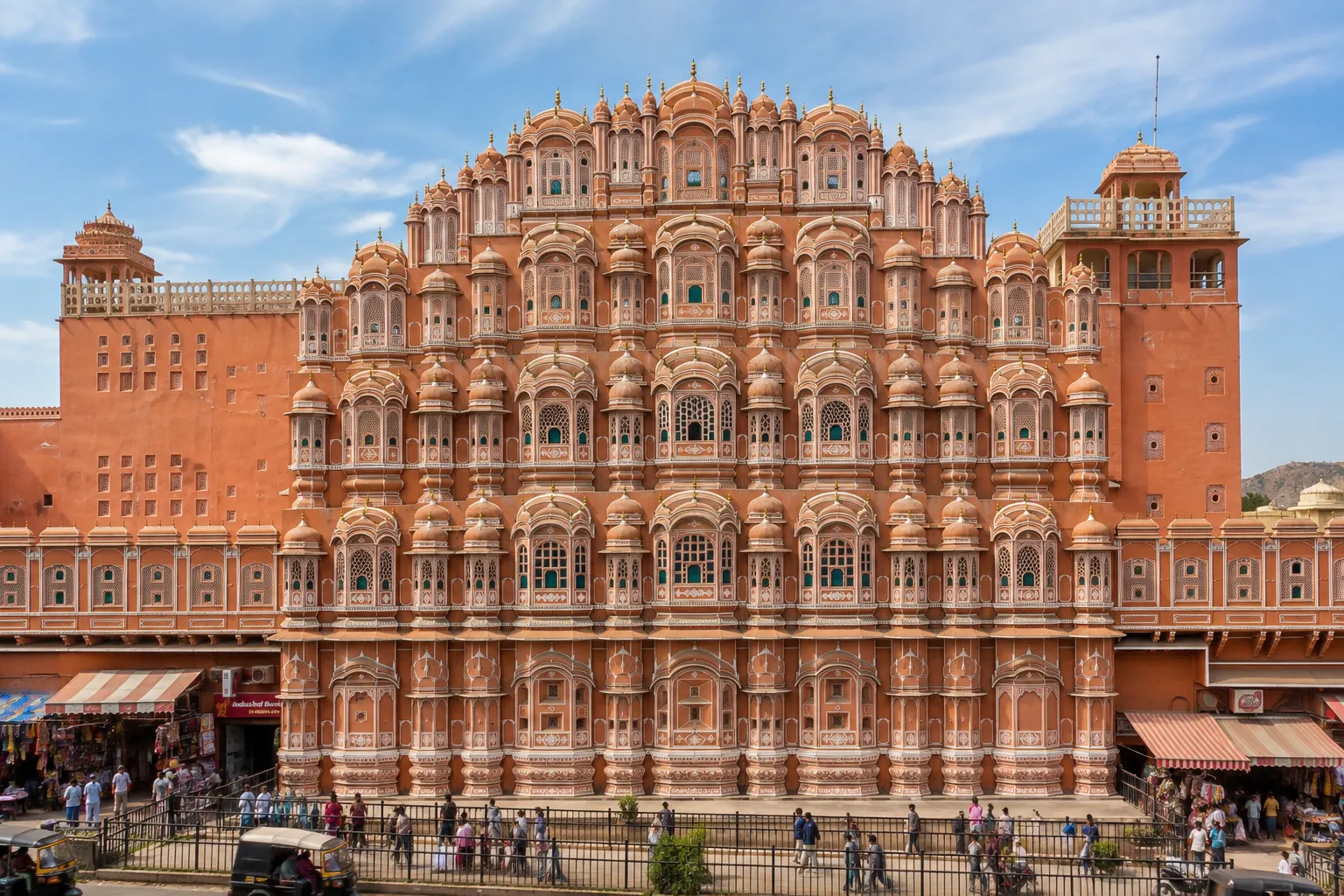
The five-story pink and red sandstone facade of Hawa Mahal is one of the most photographed structures in India, and for good reason. Built in 1799 by Maharaja Sawai Pratap Singh, this architectural marvel features 953 intricately carved windows, known as jharokhas, arranged in a honeycomb-like pattern. These windows were originally designed to allow royal women to observe daily street life and festive processions from behind ornate screens, while remaining unseen from the outside, a reflection of the purdah customs of the time.
The design isn't just beautiful; it's functional too. The numerous small windows create a natural ventilation system that keeps the palace cool even during Jaipur's scorching summers, which is how the structure earned its name, the "Palace of Winds."
Visiting early in the morning rewards you with soft golden light on the facade and significantly fewer crowds, making it ideal for photography. From inside, you can also enjoy views over the bustling streets of the old city.
-
Best time to visit: Early morning for the best light and fewer crowds
-
Located: Heart of the old walled city, near Tripolia Bazaar
-
Time needed: 30–45 minutes
3. City Palace
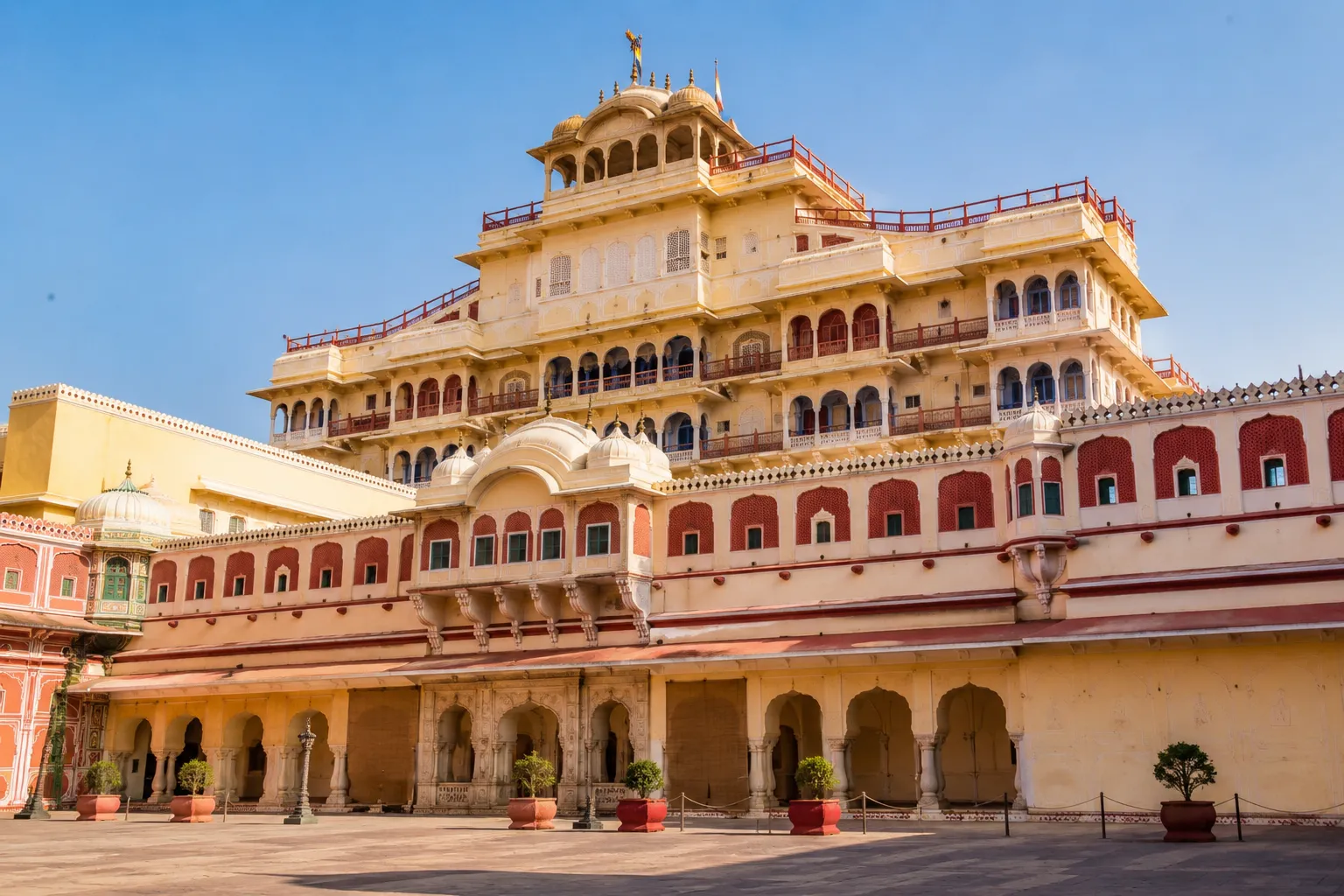
A stunning blend of Rajasthani and Mughal architecture, City Palace remains partly the residence of the former royal family, with a significant portion open to the public as a museum. Constructed by Maharaja Sawai Jai Singh II in the early 18th century, the palace complex includes courtyards, gardens, and multiple buildings that showcase the opulence of Jaipur's royal history.
Highlights within the complex include the Chandra Mahal, a seven-story building that still serves as a royal residence; the Mubarak Mahal, which houses an exquisite textile and costume museum; and an armory displaying an impressive collection of swords, shields, and firearms once used by Rajput warriors. The Peacock Gate, one of four ornately decorated gates within the palace, is particularly popular among photographers for its vibrant mosaic work.
After exploring the palace, step out into the surrounding markets. Tripolia Bazaar and Bapu Bazaar are just a short walk away and offer everything from traditional Rajasthani jootis (footwear) to block-printed textiles and semi-precious stones.
-
Best time to visit: Winter mornings
-
Nearby: Tripolia Bazaar and Bapu Bazaar for shopping
-
Time needed: 2 hours
4. Jantar Mantar
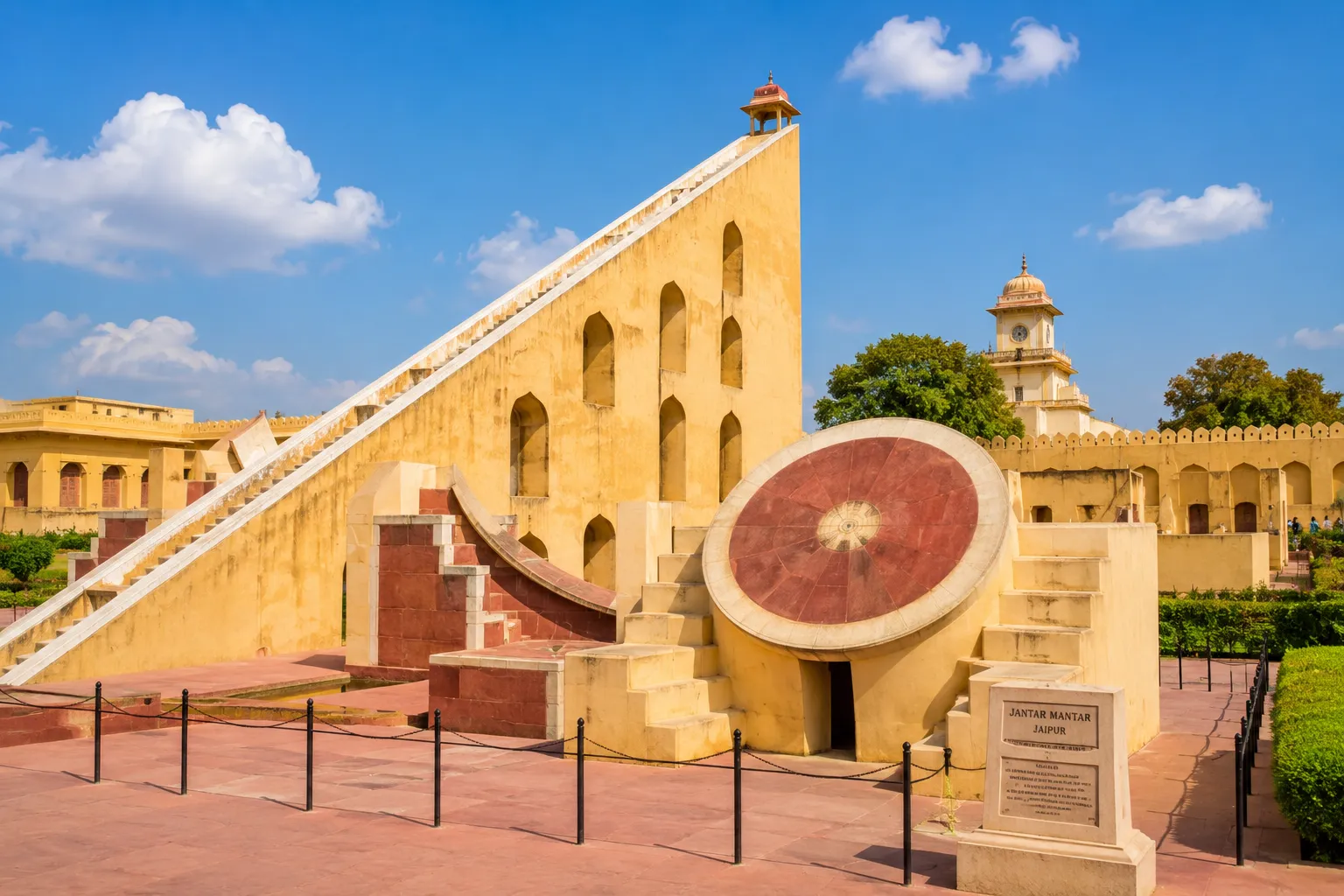
Located right next to City Palace, Jantar Mantar is a UNESCO World Heritage astronomical observatory built by Maharaja Jai Singh II between 1728 and 1734. It's one of five such observatories built across India, but the Jaipur observatory is the largest and best-preserved of them all.
The site houses nineteen massive stone and marble instruments, including the world's largest stone sundial, known as the Samrat Yantra, which can measure time with an accuracy of about two seconds. Other instruments were designed to track the movement of stars, calculate eclipses, and determine the position of celestial bodies with a precision that was remarkably advanced for its time.
For anyone with an interest in astronomy, mathematics, or the history of science, Jantar Mantar offers a rare glimpse into how ancient Indian scholars combined art and science to understand the cosmos.
-
Ideal for: History and science enthusiasts
-
Time needed: 1–1.5 hours
-
Tip: Hiring a local guide here is highly recommended, as the instruments are far more fascinating with context
5. Nahargarh Fort
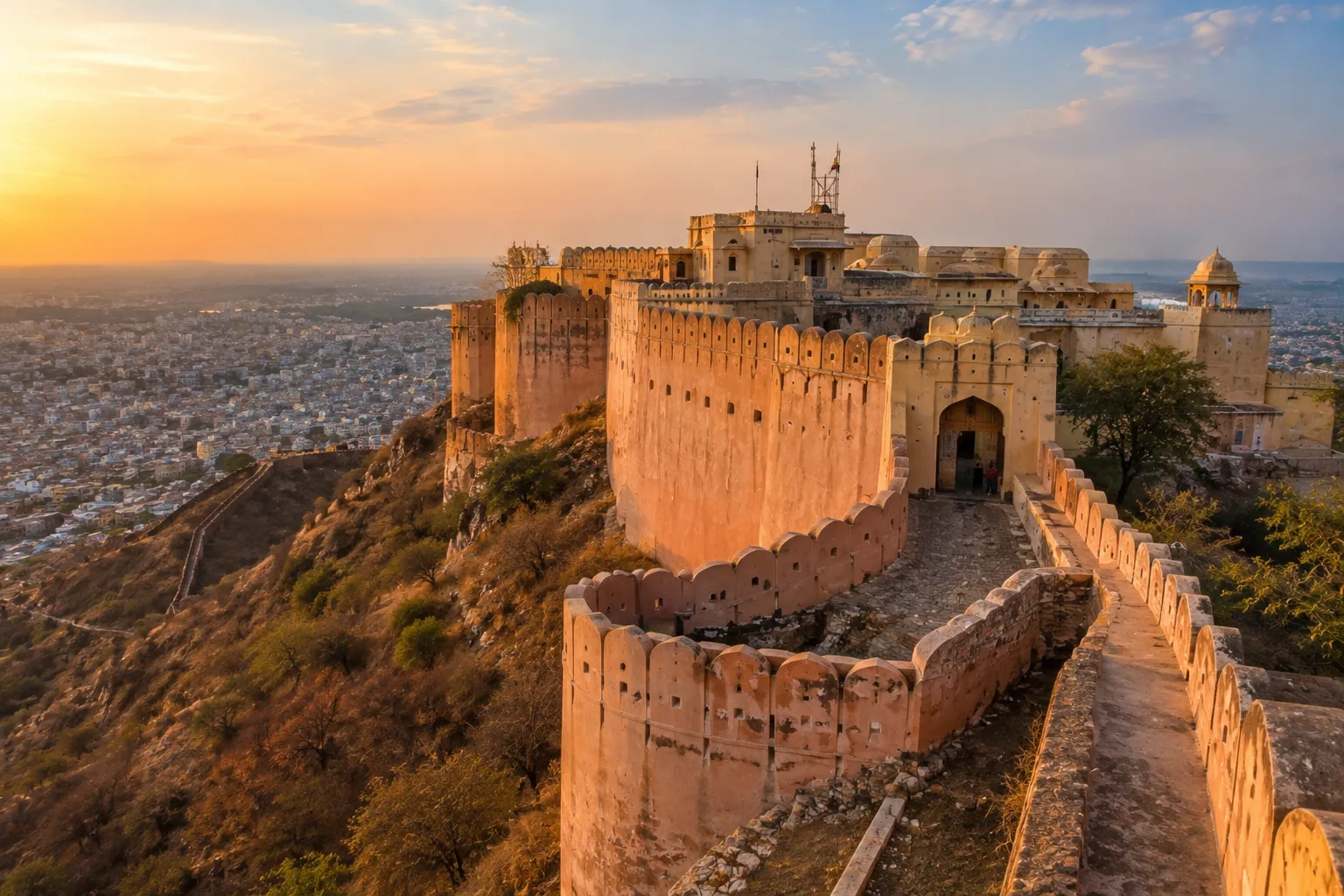
Sitting atop the Aravalli hills, Nahargarh Fort offers some of the most spectacular panoramic views of Jaipur city, especially at sunset. Built in 1734 and later extended, the fort was originally constructed as a defensive structure, part of a ring of forts that protected the city along with Amber and Jaigarh.
Today, Nahargarh is less about defense and more about tranquility. It's a peaceful escape from the hustle of the city center, with wide terraces, quiet courtyards, and a rooftop restaurant where you can sip on a hot cup of chai while watching the sun dip below the horizon and the city lights begin to twinkle below. The fort also has an interesting collection of Madhubani-style wall paintings in its Madhavendra Bhawan section, depicting scenes from mythology and royal life.
-
Best time to visit: Late afternoon into sunset
-
Bonus: Rooftop restaurant with sweeping city views
-
Time needed: 1.5–2 hours
6. Jaigarh Fort
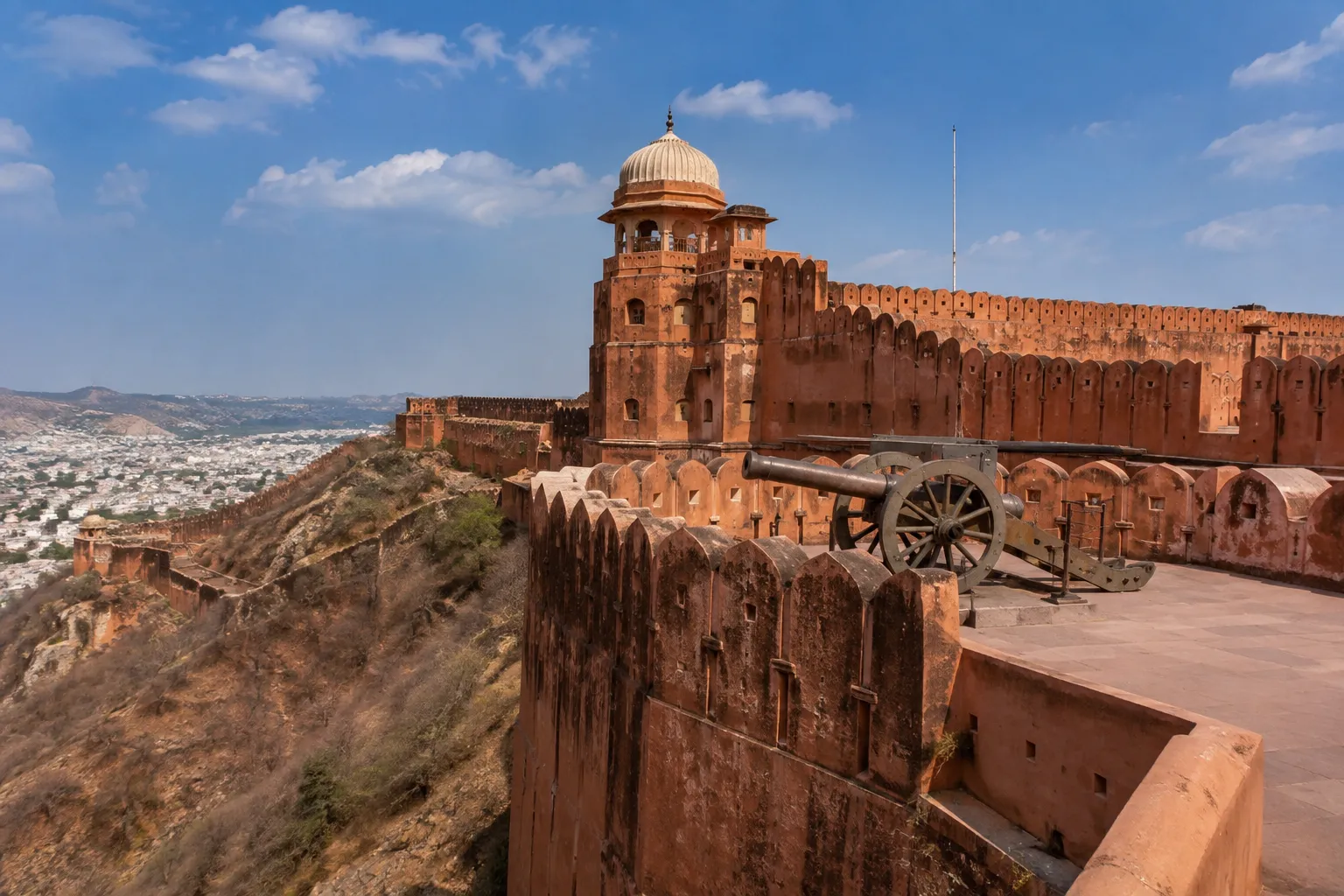
Built to protect Amber Fort and guard the Aravalli hills, Jaigarh Fort blends Indian and Persian architectural styles and is famous for housing Jaivana, the world's largest cannon on wheels. Constructed in the early 18th century, the cannon was test-fired only once, and the sound reportedly echoed for miles.
Jaigarh Fort is also connected to Amber Fort via an underground passageway, which was historically used to move royal treasures and provide an escape route during times of siege. Aside from the cannon, the fort offers sweeping views of the surrounding valley, Amber Fort below, and even Jaipur city in the distance. There's also a small museum inside displaying weapons and cannon-making equipment used by the Rajput army.
-
Highlight: Jaivana Cannon and panoramic hilltop viewpoints
-
Time needed: 2 hours
-
Tip: Combine your visit with Amber Fort since they're close and connected by a passage
7. Jal Mahal (Water Palace)
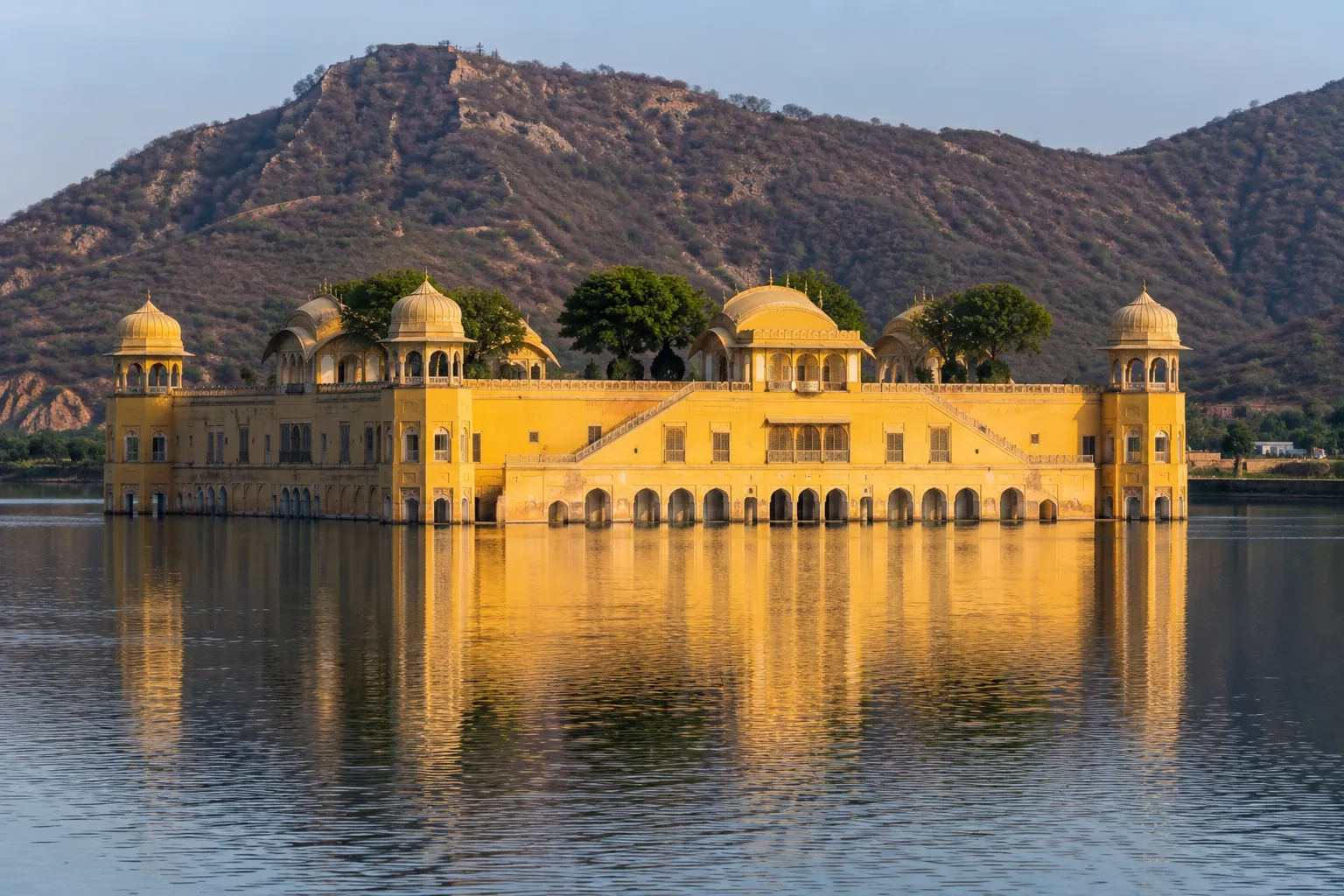
Floating gracefully in the middle of Man Sagar Lake, Jal Mahal is a five-story palace, four floors of which remain submerged underwater when the lake is full. Built in the 18th century, the palace was originally used by royals as a lodge for duck hunting expeditions and summer retreats.
While entry inside the palace isn't permitted to the general public, the view from the lakeside promenade, especially at sunrise or sunset, is simply magical. The still waters of the lake reflect the palace and the surrounding hills, creating one of the most picturesque and Instagram-worthy scenes in all of Jaipur. The area around the lake has also been developed with gardens and walking paths, making it a pleasant spot for an evening stroll.
-
Best time to visit: Sunrise or sunset
-
Ideal for: Photography and a relaxed lakeside walk
-
Time needed: 30–45 minutes
8. Albert Hall Museum
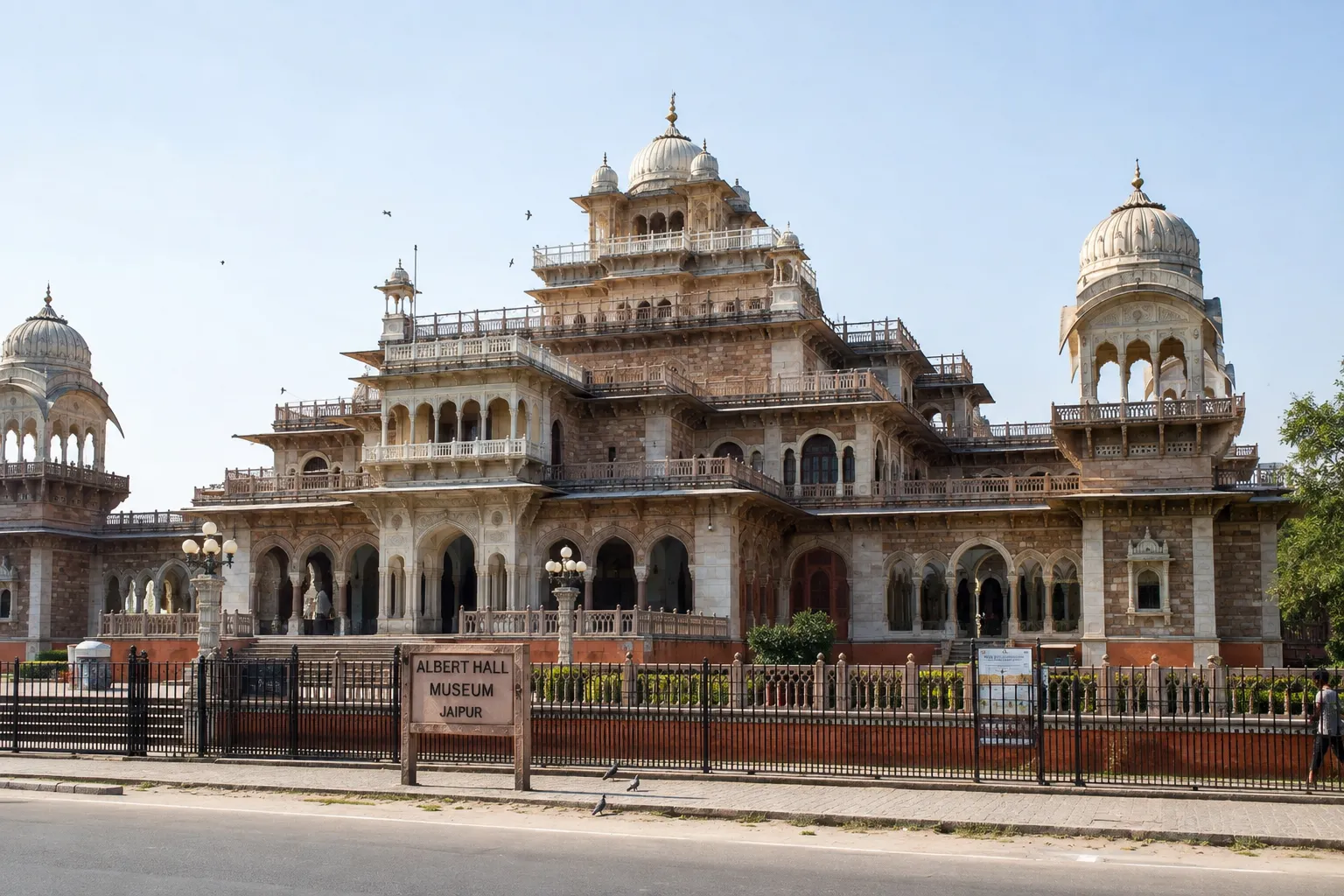
Located in the picturesque Ram Niwas Garden, Albert Hall is the oldest museum in Rajasthan and a fine example of Indo-Saracenic architecture, designed by Sir Samuel Swinton Jacob. Construction began in 1876 to commemorate the visit of the Prince of Wales (later King Edward VII) and was completed in 1887.
The museum houses an eclectic and impressive collection, including Rajasthani miniature paintings, ancient coins, intricately woven carpets, sculptures, metal artifacts, and even a genuine Egyptian mummy that has fascinated visitors for decades. The building itself is beautifully illuminated at night, making it a striking sight even if you're just passing by.
Just a short walk away is Masala Chowk, a popular open-air food court where you can sample a wide variety of Rajasthani street food in one place, a perfect way to end your visit to this part of the city.
-
Best time to visit: Evenings, when the building is beautifully illuminated
-
Nearby: Masala Chowk, for authentic Rajasthani street food
-
Time needed: 1–1.5 hours
9. Birla Mandir (Birla Temple)
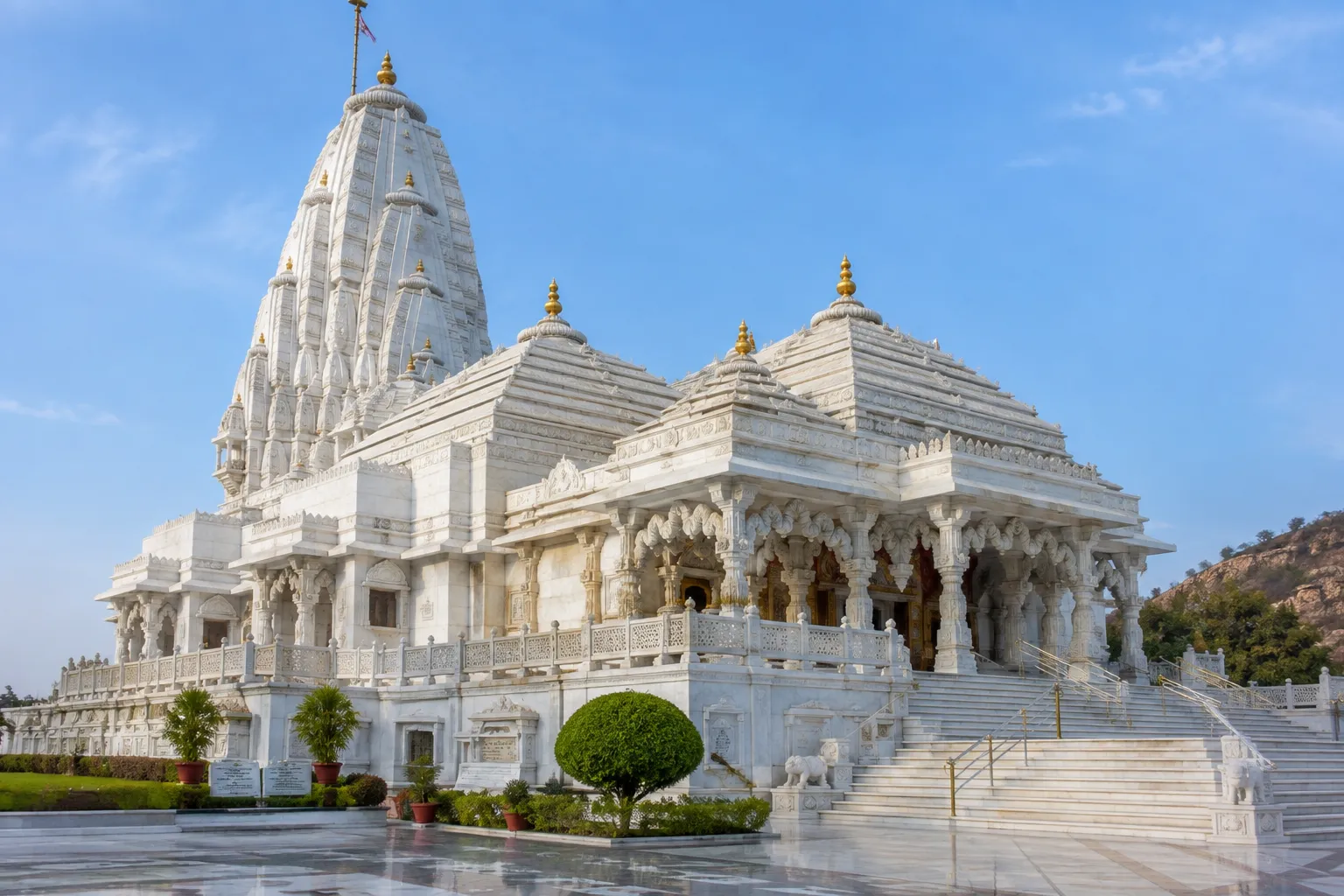
Built entirely of pristine white marble, Birla Mandir is a serene and beautifully constructed temple dedicated to Lord Vishnu and Goddess Lakshmi. Built by the B.M. Birla Foundation on the slopes of Moti Doongri, the temple stands out for its intricate carvings depicting scenes from Hindu mythology, as well as figures representing philosophers and teachings from other religions, a reflection of the temple's spirit of universal harmony.
The temple is particularly beautiful in the evening when it's illuminated against the night sky, offering a peaceful and spiritual atmosphere away from the bustle of the main tourist circuit. It's also conveniently located near Moti Doongri Fort, though the fort itself is a private property and not open to the public.
-
Best time to visit: Evening, for the illuminated view
-
Nearby attractions: Moti Doongri Fort (viewable from outside)
-
Time needed: 30–45 minutes
10. Patrika Gate & Jawahar Circle
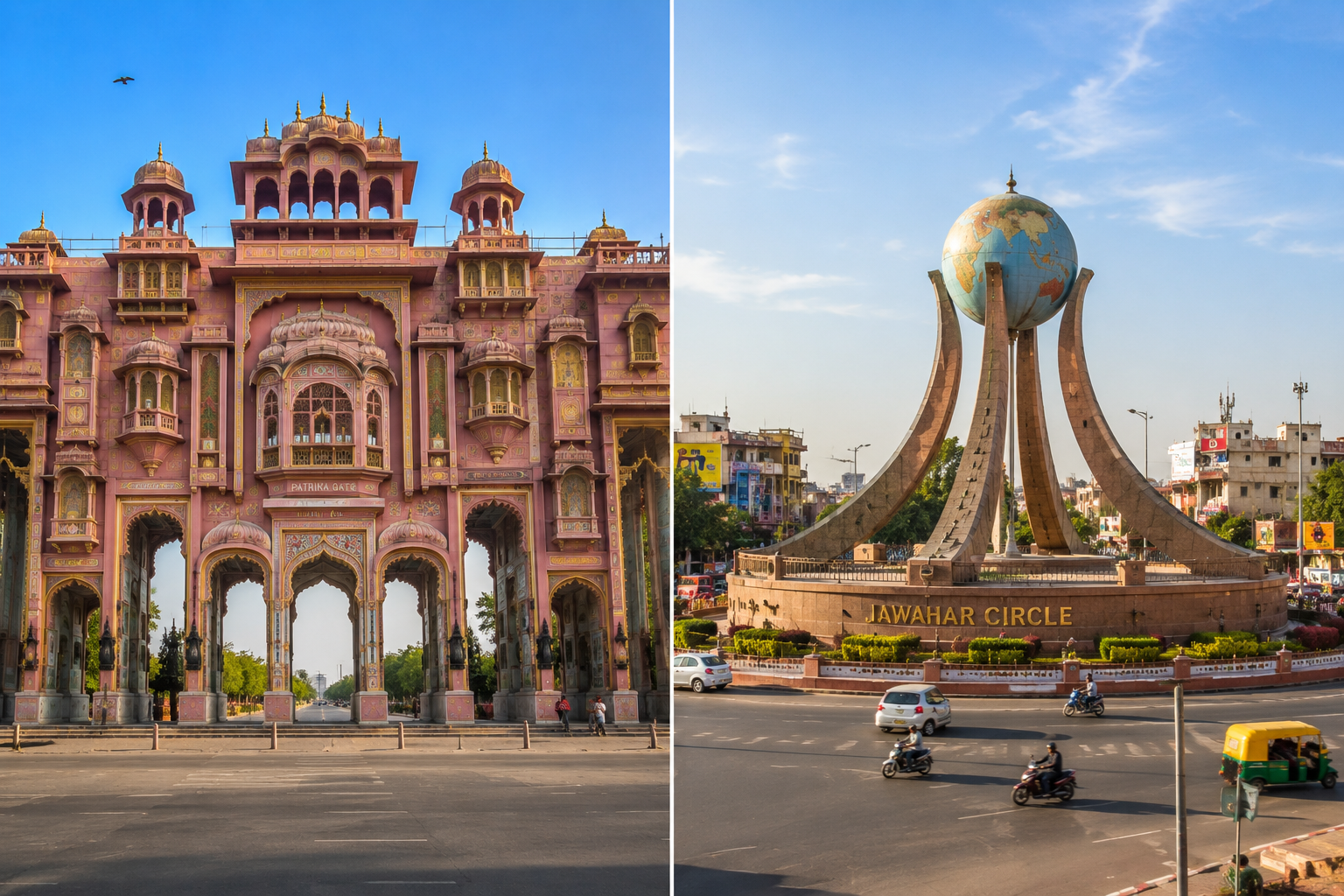
One of Jaipur's more modern attractions, Patrika Gate is a vividly painted, Instagram-famous entrance gate located at Jawahar Circle Garden, one of the largest circular parks in Asia. Constructed relatively recently, the gate's nine arches are adorned with vibrant Rajasthani art, floral motifs, and traditional patterns that celebrate the state's rich culture and heritage.
Each arch and pillar of the gate has its own distinct color scheme and design, making it a favorite spot for photographers and social media enthusiasts. The surrounding Jawahar Circle Garden is beautifully landscaped, with jogging tracks, fountains, and open lawns, making it a lovely spot for a relaxed evening walk after a day of sightseeing.
-
Best time to visit: Evening, when it's beautifully lit up
-
Ideal for: Photography and a leisurely walk in the adjoining garden
-
Time needed: 30–45 minutes
Local Cuisine You Must Try in Jaipur
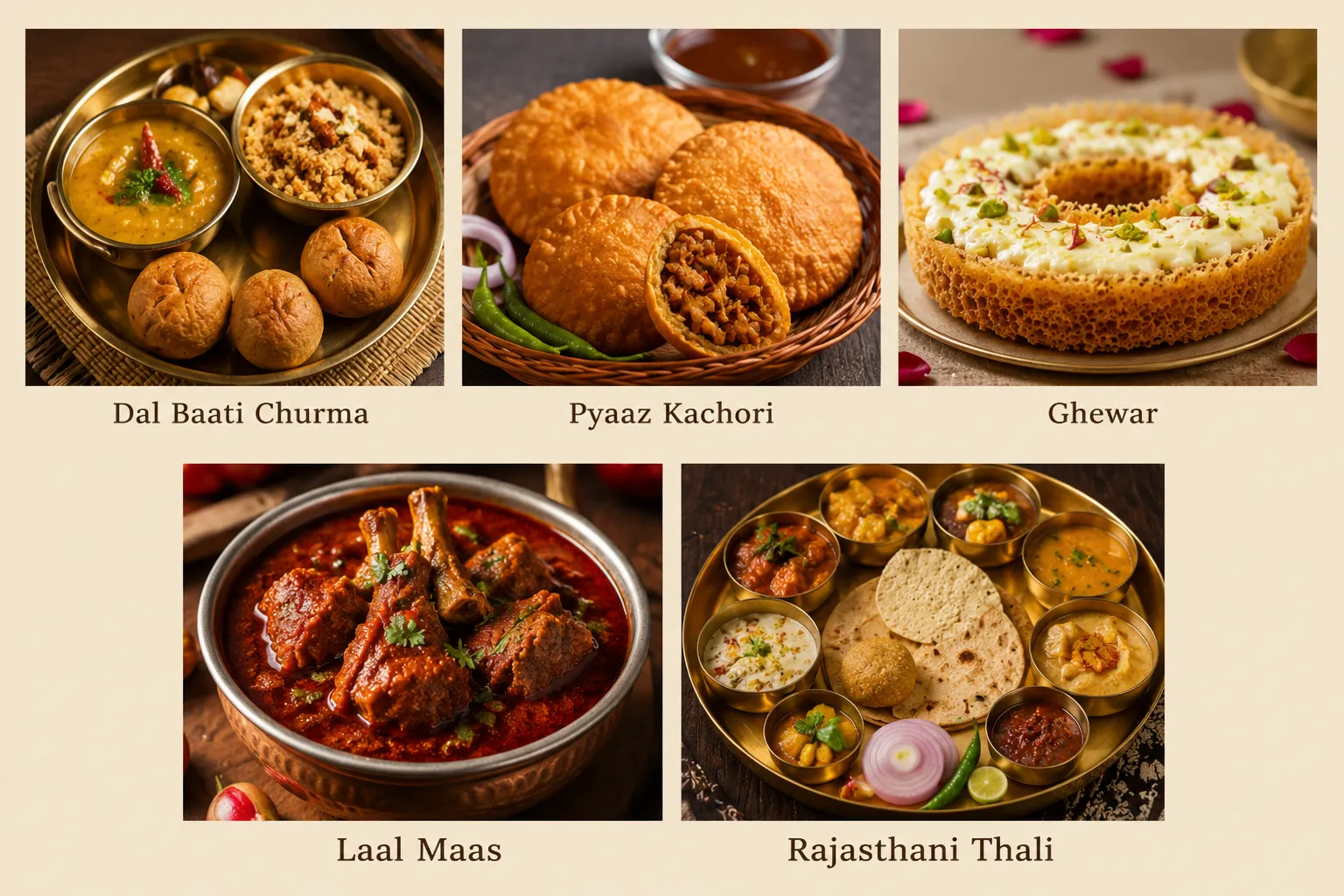
No trip to Jaipur is complete without indulging in its rich culinary offerings. Rajasthani cuisine is known for its bold flavors, generous use of ghee, and dishes that were traditionally designed to survive the desert climate. Some must-try dishes include:
-
Dal Baati Churma – A hearty combination of baked wheat balls (baati), spiced lentils (dal), and a sweet crumbled wheat dessert (churma)
-
Pyaaz Kachori – A deep-fried pastry stuffed with a spicy onion filling, best enjoyed as a breakfast snack
-
Ghewar – A disc-shaped sweet made from flour, soaked in sugar syrup, and often topped with rabri (thickened milk)
-
Laal Maas – A fiery, flavorful mutton curry made with red chilies, a Rajasthani classic for non-vegetarian food lovers
-
Rajasthani Thali – A complete platter offering a taste of multiple regional dishes in one sitting
Local eateries and street food stalls across the old city, particularly around Johari Bazaar and Chandpole, are great places to sample these dishes at reasonable prices.
Shopping in Jaipur
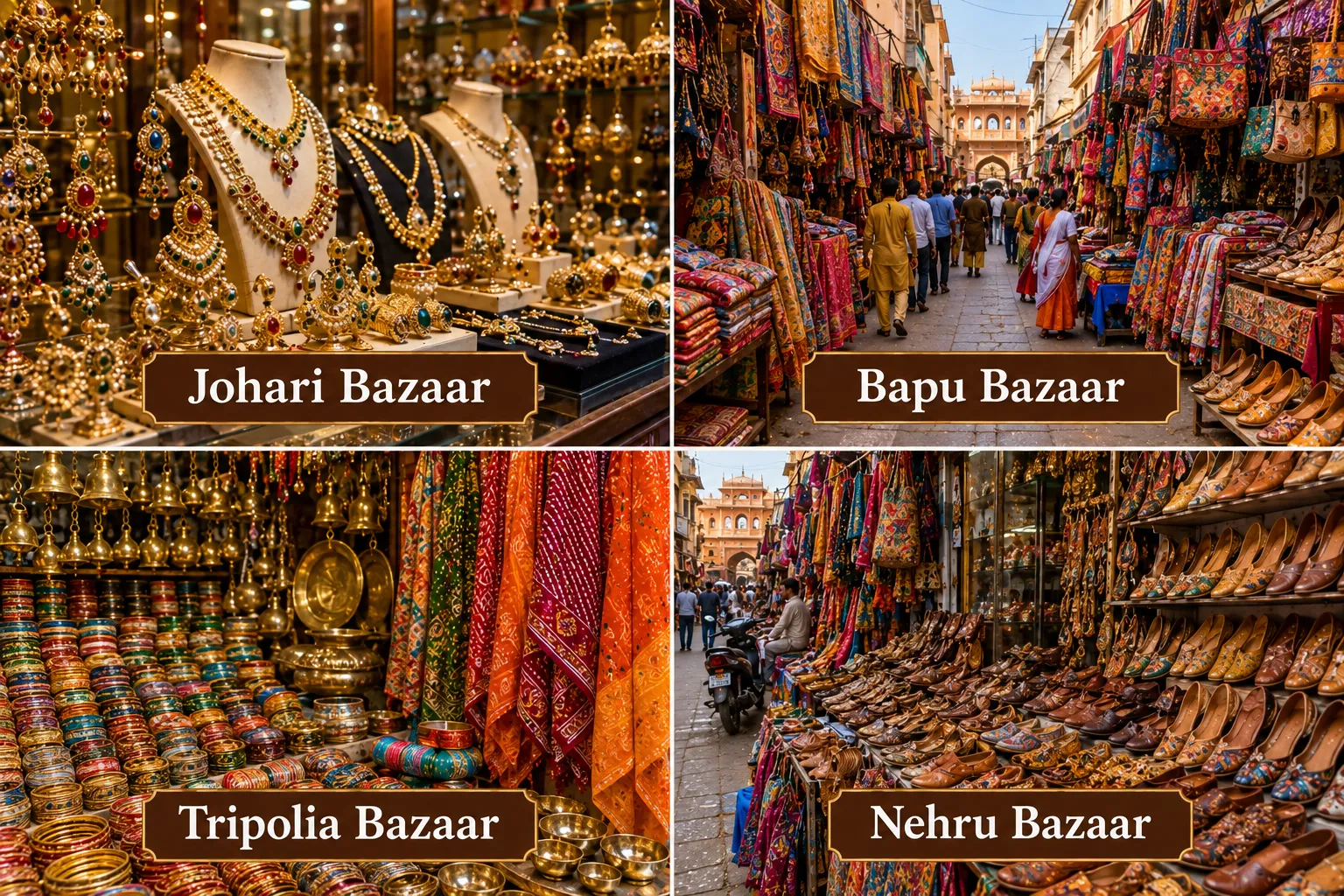
Jaipur's markets are as much a part of the experience as its monuments. Each bazaar in the old city has its own specialty:
-
Johari Bazaar – Famous for traditional Rajasthani jewelry, gemstones, and precious stones
-
Bapu Bazaar – Known for textiles, juttis (traditional footwear), and handicrafts
-
Tripolia Bazaar – A great spot for bangles, brassware, and traditional lehariya textiles
-
Nehru Bazaar – Popular for camel leather shoes and embroidered items
Bargaining is a common practice in most of these markets, so don't hesitate to negotiate a little before making a purchase.
Practical Travel Tips for Your Jaipur Trip
-
Getting around the city: Auto-rickshaws, app-based cabs, and the Jaipur Metro are all convenient options for getting between attractions. For a more relaxed and personalized experience, especially with family or a larger group, hiring a private vehicle through a trusted local operator like SSP Tour and Travels can save you a lot of time and hassle.
-
Dress code: Since many attractions are religious or historical sites, it's a good idea to dress modestly, especially when visiting temples.
-
Carry water and sun protection: Jaipur can get quite hot even outside of peak summer, so carrying water, sunscreen, and a hat is always a good idea, particularly when visiting hilltop forts like Amber, Nahargarh, and Jaigarh.
-
Plan your fort visits together: Amber Fort and Jaigarh Fort are close to each other and connected by a passage, so it makes sense to visit them on the same day.
-
Book in advance during peak season: Winter months are peak tourist season in Jaipur, so it's wise to book accommodation and transport well ahead of time.
Frequently Asked Questions About Visiting Jaipur
What are the top 10 tourist places in Jaipur?
The top 10 tourist places in Jaipur are Amber Fort, Hawa Mahal, City Palace, Jantar Mantar, Nahargarh Fort, Jaigarh Fort, Jal Mahal, Albert Hall Museum, Birla Mandir, and Patrika Gate. Each reflects a different side of the city's Rajput and Mughal heritage.
How many days are enough to explore Jaipur?
Two to three days are generally enough to cover Jaipur's major attractions, including Amber Fort, City Palace, Hawa Mahal, Jantar Mantar, and the city's main markets. Travelers with more time can add Nahargarh Fort, Jaigarh Fort, and offbeat spots at a relaxed pace.
What is Jaipur famous for?
Jaipur is famous for its pink-painted buildings, historic forts and palaces such as Amber Fort and City Palace, the UNESCO-listed Jantar Mantar observatory, Rajasthani jewelry and textiles, and its rich Rajasthani cuisine.
What is the best time to visit Jaipur?
The best time to visit Jaipur is between October and March, when daytime temperatures are cooler and more comfortable for sightseeing at outdoor forts and monuments.
How do I travel from Delhi to Jaipur?
Delhi to Jaipur can be covered by flight, train, or road. A Delhi to Jaipur Taxi Service is a popular option for travelers who want a direct, flexible journey of about 5 to 6 hours, with the option to stop at places like Neemrana along the way.
Which is the most visited tourist place in Jaipur?
Amber Fort is generally considered the most visited tourist place in Jaipur, thanks to its UNESCO World Heritage status, hilltop location, and the famous Sheesh Mahal (Mirror Palace) inside its walls.
Is Jaipur good for a family trip?
Yes, Jaipur is well suited for family trips. Its forts, palaces, and museums appeal to both adults and children, and the city offers a wide range of accommodation, food, and transport options suitable for families traveling together.
Final Thoughts
From majestic hilltop forts to vibrant bazaars, architectural marvels, and centuries-old temples, Jaipur beautifully captures the grandeur of Rajasthan's royal past while embracing its modern charm. These ten attractions offer the perfect starting point for exploring everything the Pink City has to offer, but honestly, no single visit is ever quite enough to see it all.
If you're planning a trip to Jaipur, let SSP Tour and Travels take care of the details, from comfortable transport and well-planned itineraries to local insights that go beyond the guidebooks. Pack your bags, plan your route, and get ready to be enchanted by everything this royal city has to offer.